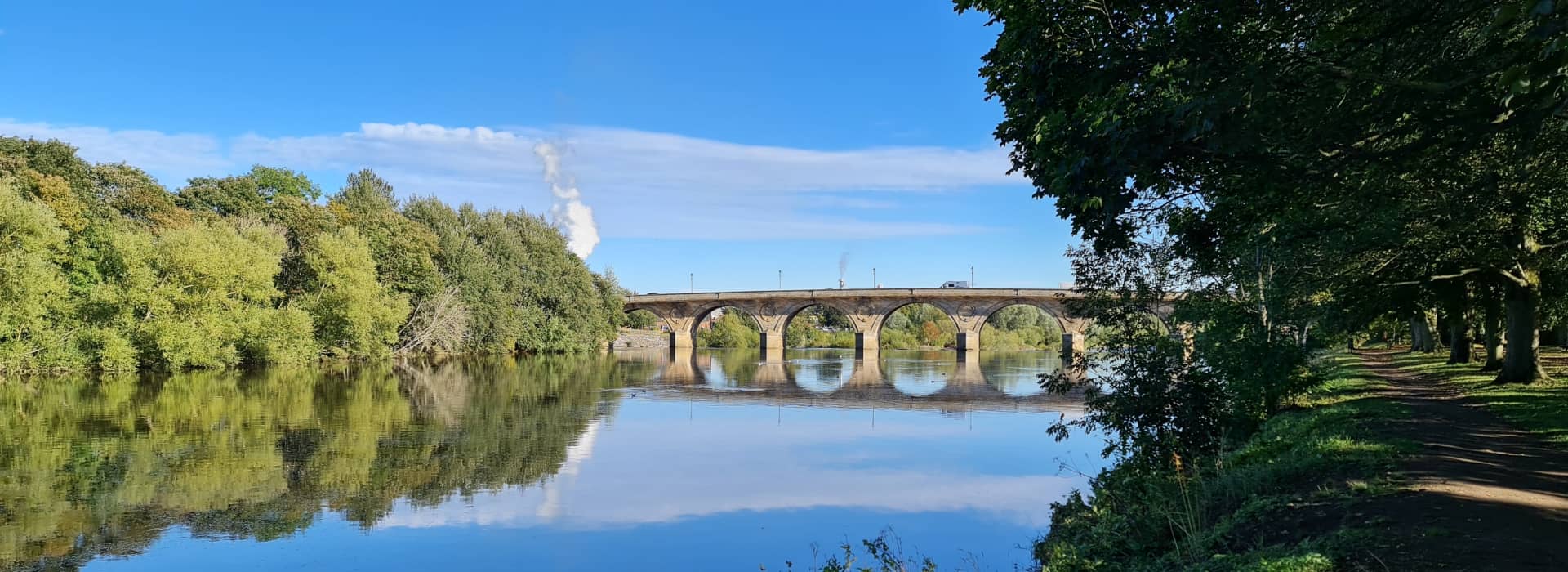
Hexham stands at the heart of the Tyne Valley, where the North Tyne and South Tyne rivers meet to form the main River Tyne a mile and a half northwest of the town. Positioned roughly midway between Newcastle and Carlisle, it serves as the principal market town for this part of Northumberland.
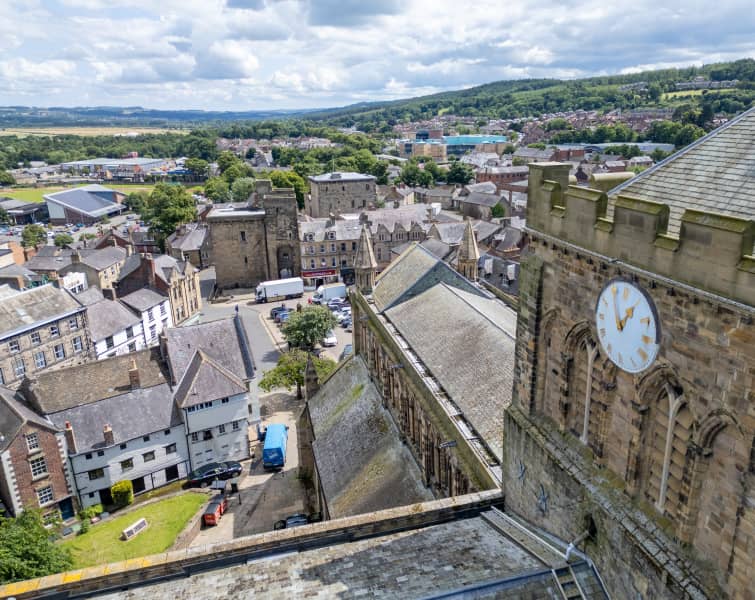
The town’s origins stretch back to AD 674, when St Wilfrid founded a monastery here, using stone salvaged from the nearby Roman fort at Corbridge. The crypt of Wilfrid’s original church survives beneath Hexham Abbey, which remains the focal point of the town and one of the North East’s most significant ecclesiastical buildings. The abbey sits on high ground overlooking the Market Place, where markets have been held since 1239.
Hexham bears the marks of its turbulent border history. William Wallace burned the town in 1297; Robert the Bruce extracted protection money in 1312; and the Battle of Hexham was fought nearby during the Wars of the Roses in 1464. The Moot Hall and the Old Gaol, England’s oldest purpose-built prison, date from the medieval period and stand close to the abbey.
From the 18th century, Hexham became known for leather-working, particularly the manufacture of gloves known as Hexham Tans. The arrival of the railway in 1835 brought the town within easier reach of Newcastle, establishing it as a commuter base, a role it continues to fulfil today. Manufacturing remains important, with EGGER’s wood panel factory and Fentimans botanical brewery among the major employers.
In 2019, Hexham was named the happiest place to live in Britain, a reflection of its strong independent shops, thriving arts scene centred on the Queen’s Hall, and its position between the Northumberland National Park and the North Pennines.